
The Amova Asset Management Global Investment Strategy Committee (GISC) convened on 10 December. The Committee remains constructive on global growth but cautious over elevated uncertainty and heightened market risks.
Key takeaways from the meeting:
— Global disinflation continues, albeit unevenly. Softening US labour-market indicators and diminishing household savings buffers provide signals of a gradual slowdown.
— Meanwhile, capex indicators in the US exhibit “fat-tail” uncertainty: high-frequency indicators remain strong, but confidence surveys reflect subdued expectations.
— Bond markets are pricing in a greater number of Federal Reserve (Fed) interest rate cuts than the Federal Open Market Committee (FOMC) itself projects, while term premia have risen globally amid heightened supply and fiscal concerns.
— AI-related investment and structural technology cycles continue to offer stock markets support in the US and parts of Asia.
— Japan’s cycle remains supported by wage gains and corporate reforms, yet long-end Japanese government bond (JGB) dynamics are increasingly shaped by market views on fiscal sustainability.
— China’s economy continues to show divergence: exports and manufacturing investment are resilient, while household demand and property remain weak.
— With forecasts widely dispersed, uncertainty remains elevated and medium-term outcomes are highly dependent on the path taken.
US economy’s contradictions: jobs vs affordability, capex vs consumption, bubble vs gradual cooling
While the baseline expectation is that monetary policy will continue focusing on inflation and employment outcomes, markets have been sensitive to signals that rate cuts could arrive earlier than previously projected.
Committee members agreed that the US economy is decelerating but remains fundamentally resilient. Median GDP growth projections fell from above 3% year-on-year (YoY) in late-2025 to near 2% YoY by mid-2026, though the full range spans roughly 0.5% to the mid-3% area. Labour-market softening is increasingly evident amid rising unemployment claims and slowing job creation. Consumer sentiment has weakened, yet high-income consumption remains relatively steady, supporting overall demand. Meanwhile, H1 2026 offers an opportunity for the economy to recover from the US government shutdown, with the recent US fiscal package providing support.
Chart 1: Global business confidence and capex
Although Capex remains strong, corporate sentiment has diverged to the downside.
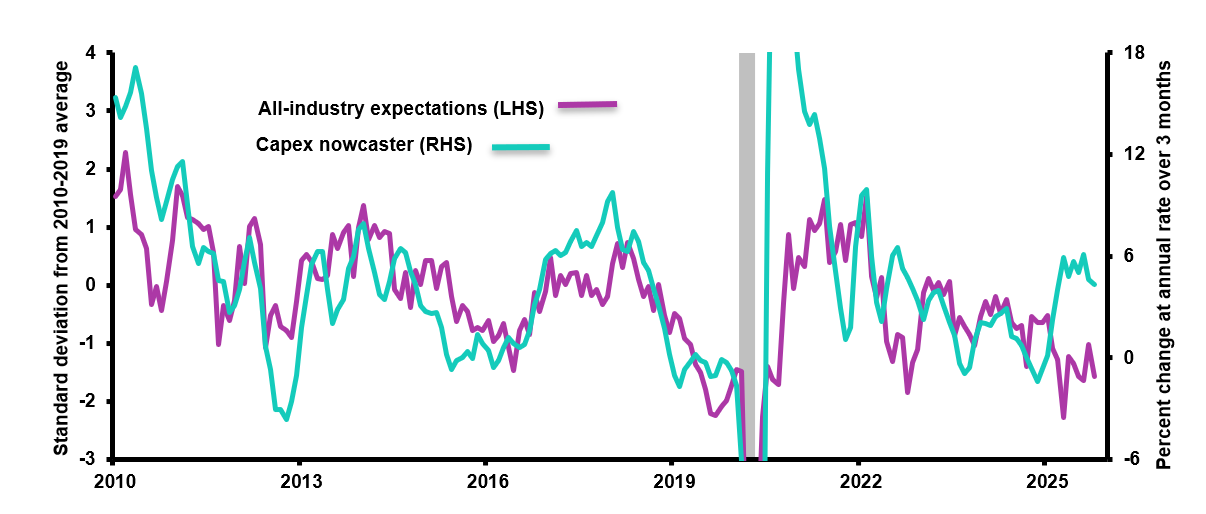
Grey bar represents disruption from the pandemic.
Source: S&P Global, national sources, J.P. Morgan
Inflation is expected to drift gradually lower, while remaining above the FOMC’s 2% target over the outlook horizon, though high uncertainty persists. Several members noted upside risks from commodity prices and tariffs, while others emphasised improving supply conditions and easing services inflation. Overall, the Committee views the inflation path as subject to pressures in both directions rather than heading for a smooth decline and expects between one and two additional rate cuts before the end of 2026. Given the uncertainty surrounding inflation, the Committee remains modestly more conservative than the market on the Fed’s ability to deliver aggressive rate cuts.
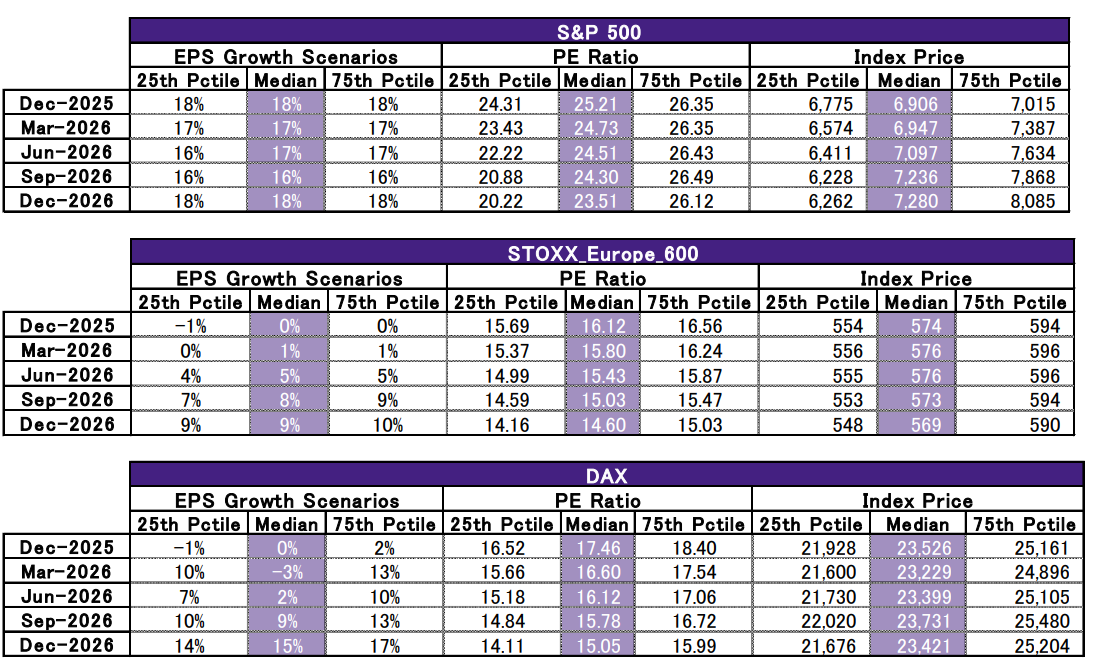
US equity outlook: Committee members noted that equity market leadership remains narrow and is driven by AI-linked mega-caps. While expectations remain constructive on earnings growth, several members highlighted signs of valuation stretch and late-cycle dynamics. In Charts 2 and 3, we illustrate that while the long-term tech “supercycle” (proxied by an S&P and SOX composite) remains on a marked uptrend, the shorter-term business cycle amplitude has exploded since 2024, which contrasts with the low implied equity volatilities. EPS growth is expected to remain positive and looks increasingly likely to deliver results that justify elevated valuations.
Chart 2: Long-term tech supercycle remains robust
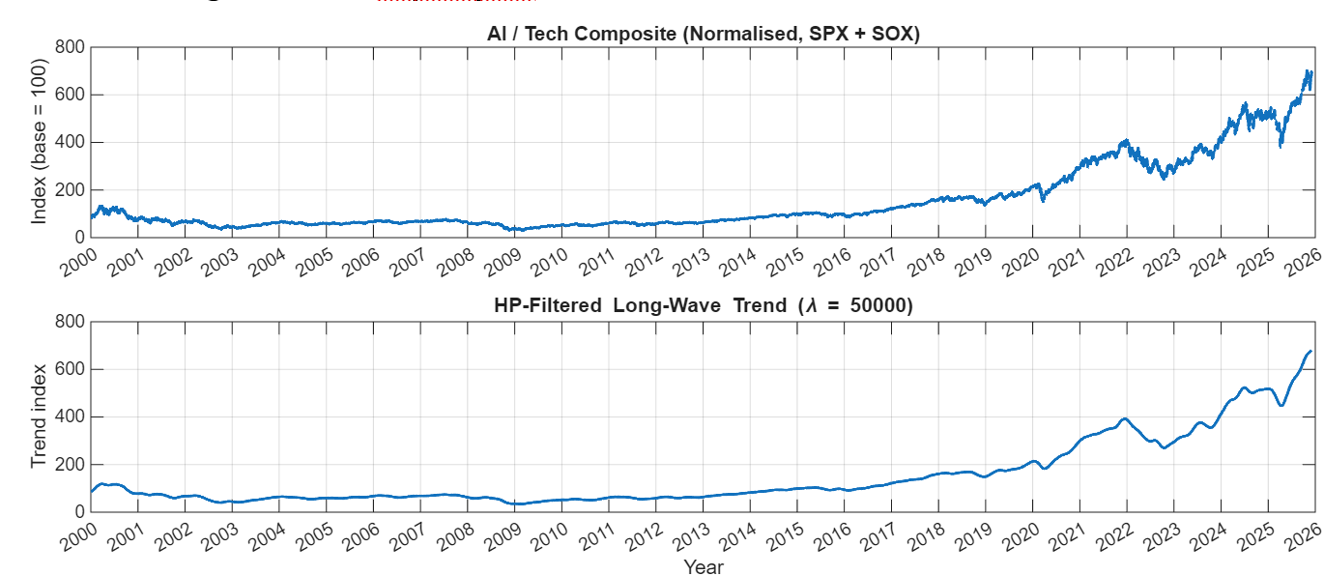
Rebased to 100 in 2000
Source: Amova AM, based on Bloomberg Data
Chart 3: However, short-term dynamics are volatile
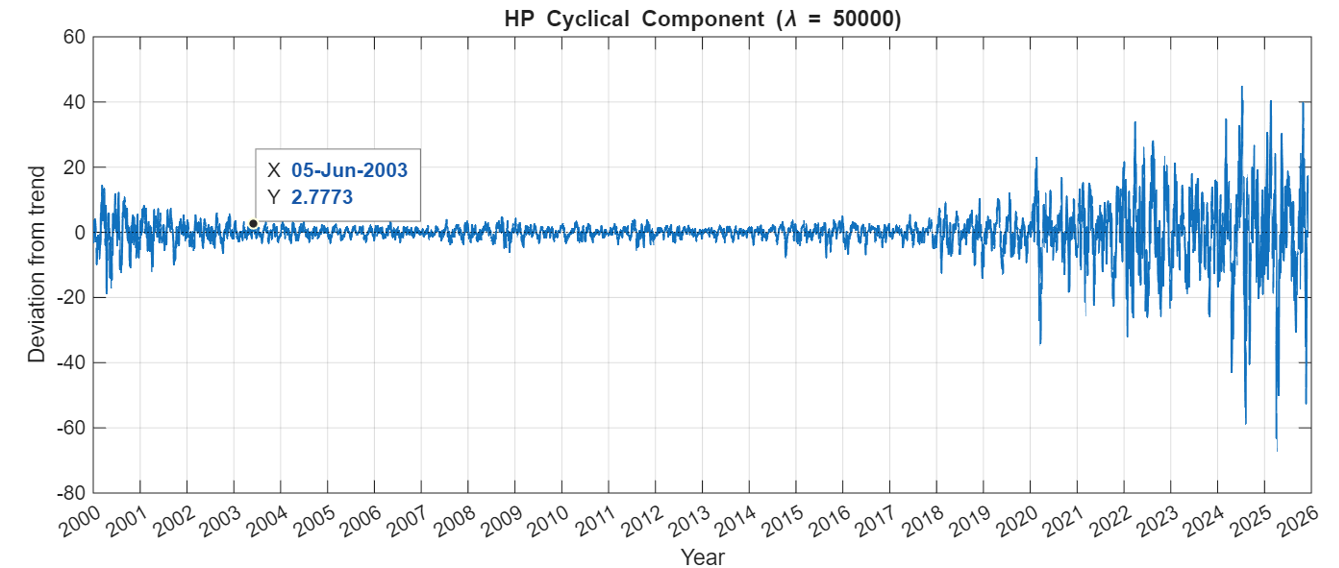
Rebased to 100 in 2000.
Source: Amova AM, based on Bloomberg data
US fixed-income outlook: Committee members emphasised that long-term yields increasingly reflect term-premium dynamics and concerns about supply rather than policy expectations alone. The GISC expects 10-year Treasury yields to fluctuate between the high-3% and mid-4% levels over 2026. Whether the Fed maintains its independence remains a hotly debated topic within markets, and it has a bearing on the stability of the long-term US bond market.
Japan: above-potential growth, but fiscal risks could weigh on JGBs
Committee perspectives on Japan highlighted increasing two-way risks in policy and market dynamics. Japan’s GDP growth is expected to fluctuate around 0–1% YoY through 2026—keeping above potential (0.5%) on trend. However, the quarterly range is wide for any given quarter, from slightly negative to above 2% YoY, reflecting vulnerability to external demand and variations in domestic confidence.
The Committee expects headline CPI to fall below 2% in 2026, with core ex-fresh food inflation being slightly softer due to fiscal measures designed to support households. However, several members underlined that real wage growth remains shallow, posing challenges for a robust consumption recovery.
The committee expects the Bank of Japan (BOJ) to hike rates to 1% over the course of 2026 and then pause as real rates reach the lower end of the plausible “neutral” range. There are, however, upside risks to this outlook as increased fiscal stimulus may prompt the BOJ to act more aggressively.
Chart 4: Japan’s estimated neutral real interest rates (r*)
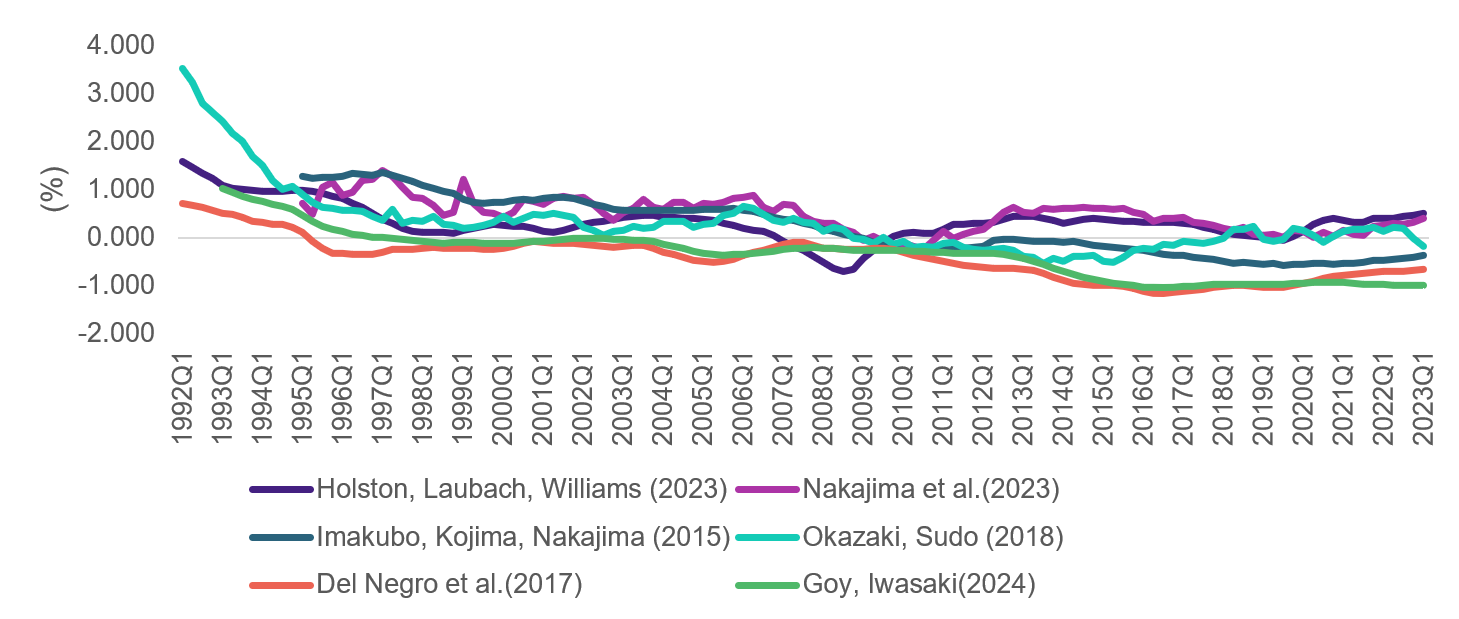
*“Neutral” real interest rates are estimated to sit between -1% to 0.5%.
Source: BOJ
JGB markets: A recurring theme was the growing importance of long-end market pricing. Members noted that JGB yields are increasingly shaped by foreign investor demand and market perceptions of fiscal sustainability rather than the BOJ’s purchase operations. Some expressed concern that continued fiscal expansion, if not paired with productivity gains, could lead to a market-driven steepening that could complicate the BOJ’s policy path. The Committee foresees 10-year JGB yields ranging between the mid-1% to mid-2% levels over the course of 2026.
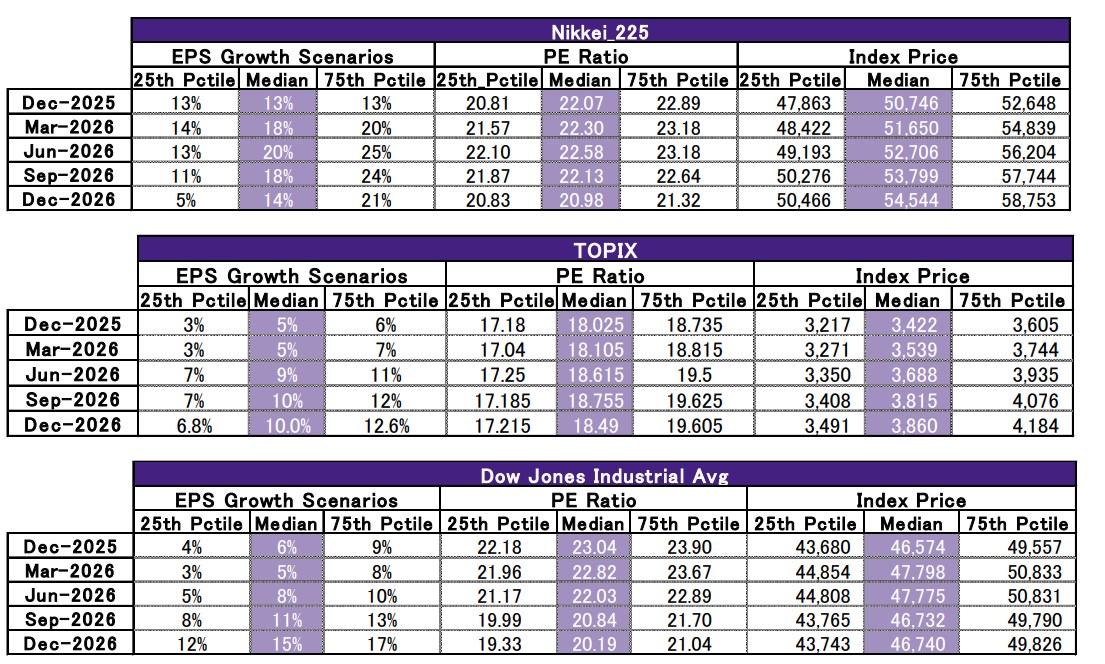
Japanese equities remain supported by governance reforms, improvements in shareholder returns and structural investment trends such as those in the AI, semiconductor and automation sectors. However, several members observed that after significant gains, markets may undergo consolidation before making an earnings-led rebound. The TOPIX earnings trajectory is expected to remain in single-digit expansion territory over the first half of 2026. It is then seen accelerating toward the latter half of 2026, as tariff uncertainty fades and robust global investment—in addition to consumption boosted by domestic wage growth and fiscal stimulus—supports corporate earnings.
Europe: in recovery, ECB on hold
The market has already priced in an ongoing economic recovery in Europe, which Committee members expect to slowly gain traction. Real GDP growth is expected to rise above 1% YoY by mid-2026, supported by subsiding core inflation, which is seen retreating back to the ECB’s 2% target. However, the ECB’s easing trajectory has most likely come to an end, and accommodation may stimulate growth with a lag. The Committee expects 10-year Bund yield to rise modestly as fiscal spending necessitates greater issuance, with a probability of 75% or greater that it will remain contained below 3% until the latter half of 2026. Regarding equities, the Committee’s view is in line with consensus; it foresees European equities showing steady improvements in earnings growth over the course of 2026. However, as with US equities, valuations may have outpaced earnings and could have already peaked in late 2025.
China: addressing uneven economic growth
China’s full-year GDP growth is expected at around 5% for 2025, the last year in China’s current five-year plan. The Committee generally expects the growth rate to remain range-bound into 2026. However, China’s new five-year plan signals a shift from quantitative to qualitative growth targets, suggesting the 5% level may no longer be strictly maintained.
Committee members highlighted the widening divergence between external and domestic drivers in China. Manufacturing investment and exports have stayed resilient—even gaining market share—while household consumption and property activity remain soft. Some members noted that the recent improvement in core CPI (which rebounded into positive territory) reflects normalisation rather than broad demand recovery. Still, the Committee does not expect China to lapse back into deflation, with the new five-year plan making consumption a top priority. Government spending, however, may focus especially on supporting services, including healthcare, aged care, childcare and leisure services, in addition to R&D in technology-adjacent areas.
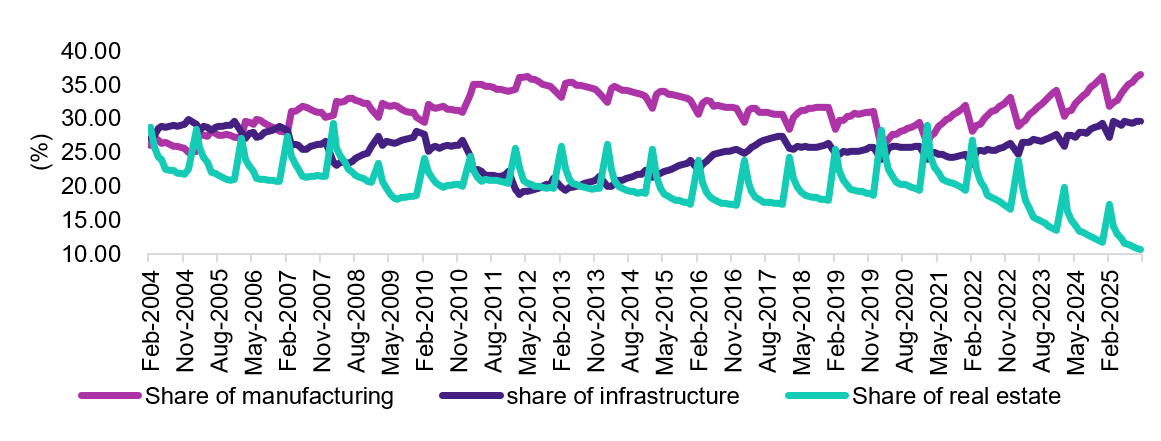
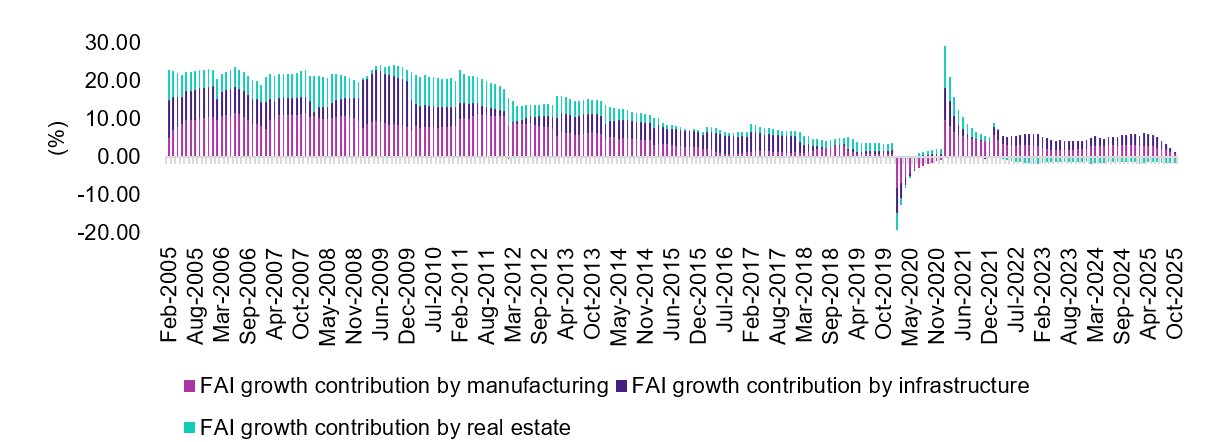
The Committee expects GDP growth to decelerate modestly from the high-4% range in 2026, though the headline rate masks a purposeful shift in strategy by authorities over China’s growth dynamics. Charts 5 and 6 illustrate a clear two-speed pattern between policy-supported sectors and property weakness. Members expect only incremental monetary easing until further Politburo guidance clarifies Beijing’s near-term priorities. The end of Q1 2026 brings the NPC, followed by an April Politburo meeting, which may further clarify policy priorities. Meanwhile, China’s triennial Belt and Road forum at the end of H1 and ongoing negotiations with the US before the expiry of the current trade truce could become key focal points.
Chart 5: Share of fixed asset investment (FAI) in China by sector (%)
Source: PRC Macro
Chart 6: FAI growth rate contribution in China by sector (%)
Source: PRC Macro
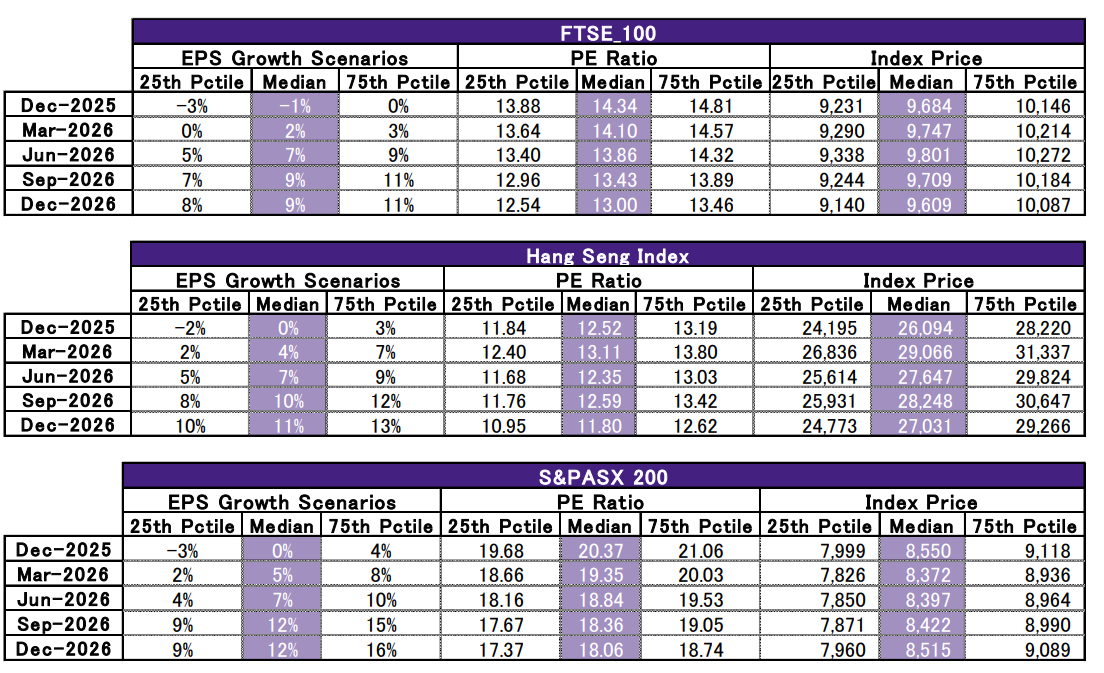
Chinese equity markets have picked up recently despite deflationary pressures. The Committee expects earnings growth to continue improving as the year progresses, supported by innovative industries, export-oriented sectors and buybacks. However, some Committee members warned of near-term consolidation following pockets of market exuberance. Structural concerns persist around property, credit transmission and external demand durability.
Principal risks to the outlook: deconstructing the fat-tail risks
With uncertainty elevated despite a positive growth trajectory, the Committee dedicated significant attention to risks to the global economy and markets. The Committee scores these risks by subjective probability and anticipated impact, and this quarter both content and scoring showed a wide dispersion. Even so, several themes consistently ranked high in both likelihood and potential impact.
Inflation resurgence and policy-credibility shocks are the dominant risk clusters
The Committee’s aggregated risk profile highlighted two dominant clusters.
- First was the inflation cluster. Members flagged the risk of inflation resurging across geographies, with possible ramifications on US stock and bond markets in addition to the commodity markets. A renewed US-China trade war could amplify these price pressures.
- Second was the policy-credibility cluster. Concerns centre on the BOJ falling behind the curve (which could also be seen as part of an inflation cluster risk) and the heightened probability of a standoff between Japan’s Takaichi administration and JGB investors. Ongoing uncertainty about the outlook for FOMC independence also falls into this cluster.
- Beyond these two clusters, stress in private credit linked to AI financing may also emerge as a risk point, given the tech sector’s lofty valuations and increase in debt-fuelled financing.
Given elevated uncertainty and dispersion across forecasts, the following six risks warrant heightened attention in investor positioning and allocation:
1. Inflation re-acceleration risk (high probability cluster, high impact)
Many members assigned moderate-to-high probabilities (20–30%) to inflation re-accelerating due to commodity shocks, tariff effects, supply-chain constraints, or premature easing. The impact was consistently rated as high, given the potential to trigger disorderly repricing across bond markets and risk assets.
2. Policy credibility and market sensitivity (moderate probability, high impact)
While political dynamics were not the main focus, several members noted that any perceived reduction in central bank independence could affect market confidence. The aggregated view assigns a moderate probability (15–25%). However, the potential impact is high, due to the risk of yields overshooting and heightened volatility in risk assets.
3. Japan’s fiscal policy heightening market tension (moderate probability, high impact)
Members highlighted that JGB yields are increasingly influenced by market perceptions of fiscal sustainability. Several assigned high-impact scores to scenarios where yields rise faster than anticipated, increasing volatility in the yen and Japanese equities.
4. Chinese domestic demand undershooting (high probability, moderate impact)
Given persistent weakness in consumption and property, several members rated the probability of demand undershooting as high (25–35%). The impact was judged as moderate due to the cushioning effect of exports and selective policy tools.
5. Private credit and AI-infrastructure vulnerabilities (low probability, high impact)
Some members highlighted latent risks in private credit—particularly exposures tied to AI-related infrastructure. While probabilities were lower (5–15%), the potential spillovers into public markets were considered high-impact.
6. Geopolitical and trade shock risks (moderate probability, moderate-to-high impact)
Risks include US–China trade frictions, Japan–China tensions, Europe–China industrial-policy disputes and global supply-chain realignment. Subjective probabilities ranged from 20–30%, with moderate-to-high impact ratings.
Appendix 1: GISC Outlook guidance
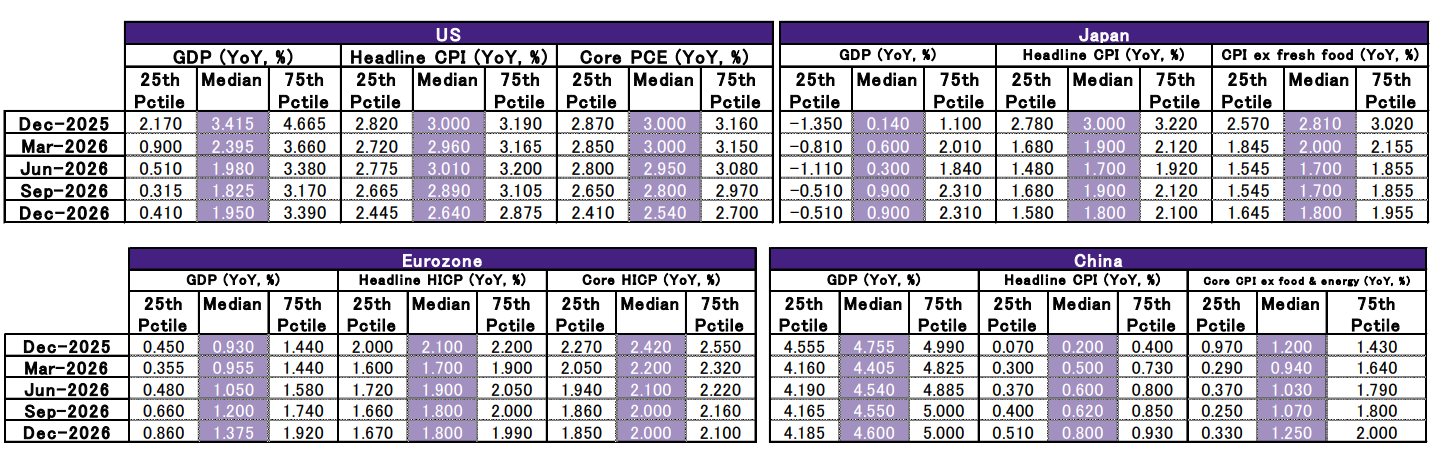
Global macro indicators
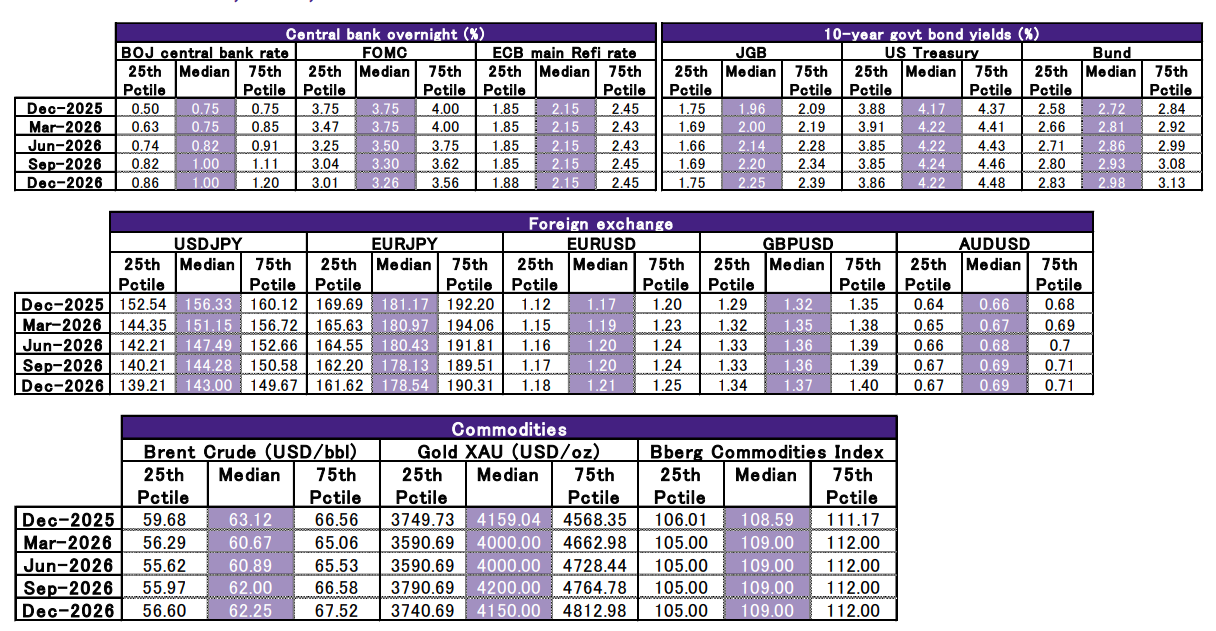
Central bank rates, forex, fixed income and commodities
Equities